What Makes a Moment Worth Clipping
Not every funny line survives the cut to vertical video — here's how to spot the moments that actually hold attention.
Long recordings are full of moments that feel great live but fall flat once isolated into a 20-second clip. Clipping is a different skill from recording: you're not judging what was fun to experience, you're judging what will hold a stranger's attention with zero context. Before you cut anything, it helps to have a clear idea of what actually works once it's stripped out of the conversation.
It has a beginning a stranger can enter
A clip that opens mid-thought forces viewers to catch up, and most won't bother. Good clips tend to start at a natural entry point — a question being asked, a reaction building, a sentence that sets up its own payoff. If you have to explain what happened before the clip starts for it to make sense, it's probably the wrong starting point.
The reaction matters more than the line
Funny or shocking words rarely carry a clip on their own. What usually holds attention is the reaction around them — a laugh, a pause, a face, a second person's response. When reviewing long footage, it's worth watching for the reaction shot as much as the line itself, since that's often the part that makes people keep watching.
It resolves, even briefly
Viewers scroll away fast if a clip feels like it's going nowhere. A moment worth clipping usually has some kind of small resolution: a punchline lands, a question gets answered, a silence breaks. Clips that just trail off tend to underperform no matter how good the setup was.
Dead air kills otherwise-good clips
Even a strong moment can lose momentum if it's surrounded by pauses, stammering, or filler. This is one of the most common reasons a clip that seemed great in the raw footage feels slow once exported. Running a pass with a silence remover on already-edited footage can tighten pacing without re-cutting the whole thing, and it's worth doing before judging whether a moment is actually weak or just poorly paced.
Context you don't need to explain
The best clips work without captions explaining who's who or what show this is from. If a moment depends on knowing the backstory of the people involved, it's a harder sell for cold audiences. That doesn't mean every clip needs to be universal — niche audiences can carry inside references — but it's worth being honest about how much context a viewer actually has before you post.
Finding these moments at scale
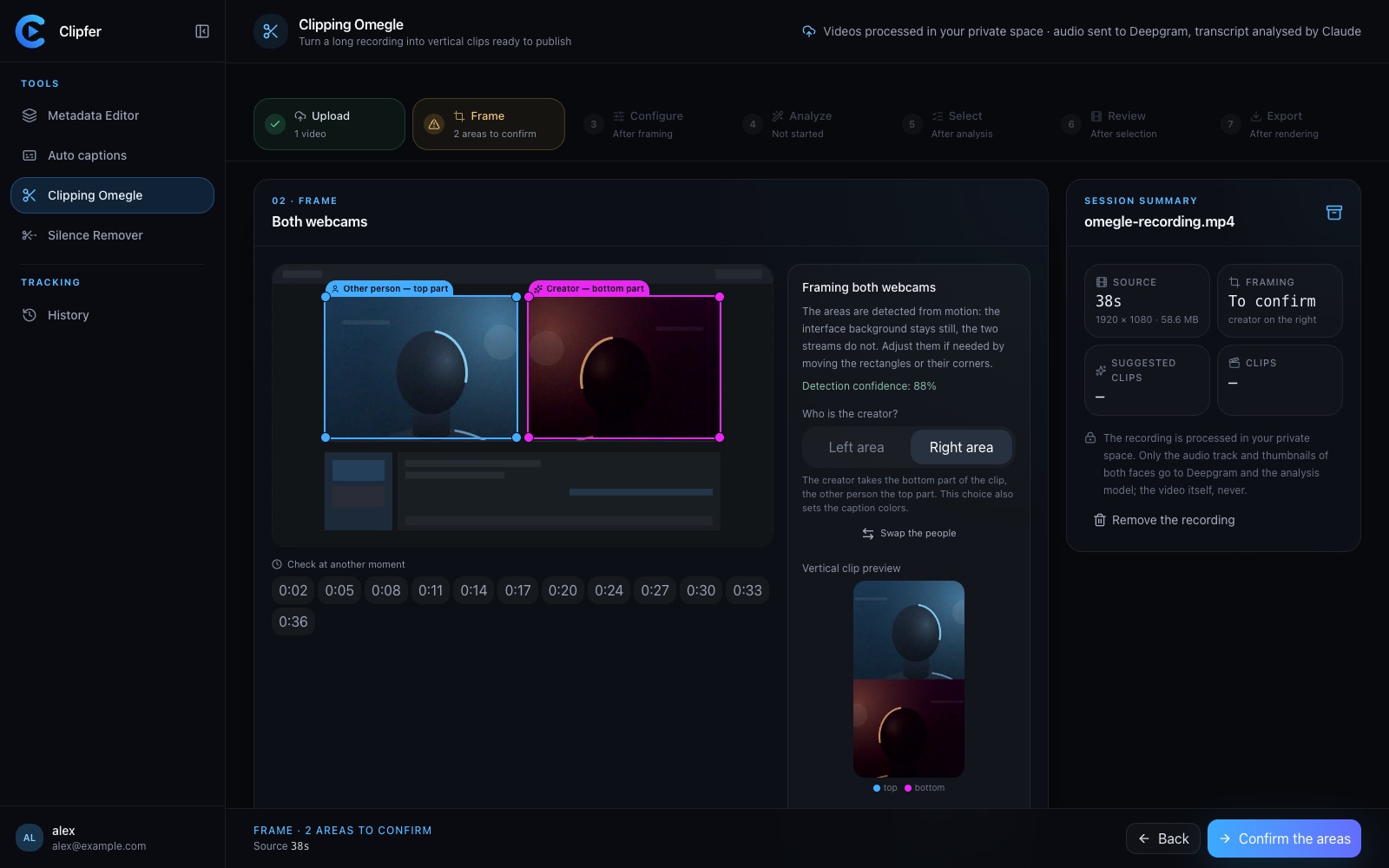
Reviewing hours of footage manually to find clip-worthy moments doesn't scale well, especially for creators working with long-format recordings like Omegle or Ome.tv conversations. Clipfer's Clipping Omegle tool analyzes long recordings with a model that proposes candidate passages automatically, cutting dead time and handing you a shortlist instead of a raw timeline. From there, the video clipping editor lets you refine the exact in and out points, add captions, and layer sound effects before export.
Once you've identified a moment worth using, it's also worth considering how it reads with captions on, since most viewers watch vertical video with sound off at first. Auto captions can be generated and styled per speaker, which often reveals whether a moment actually holds up in silence — a useful second filter before you commit to publishing a clip.
Related reading
Related articles
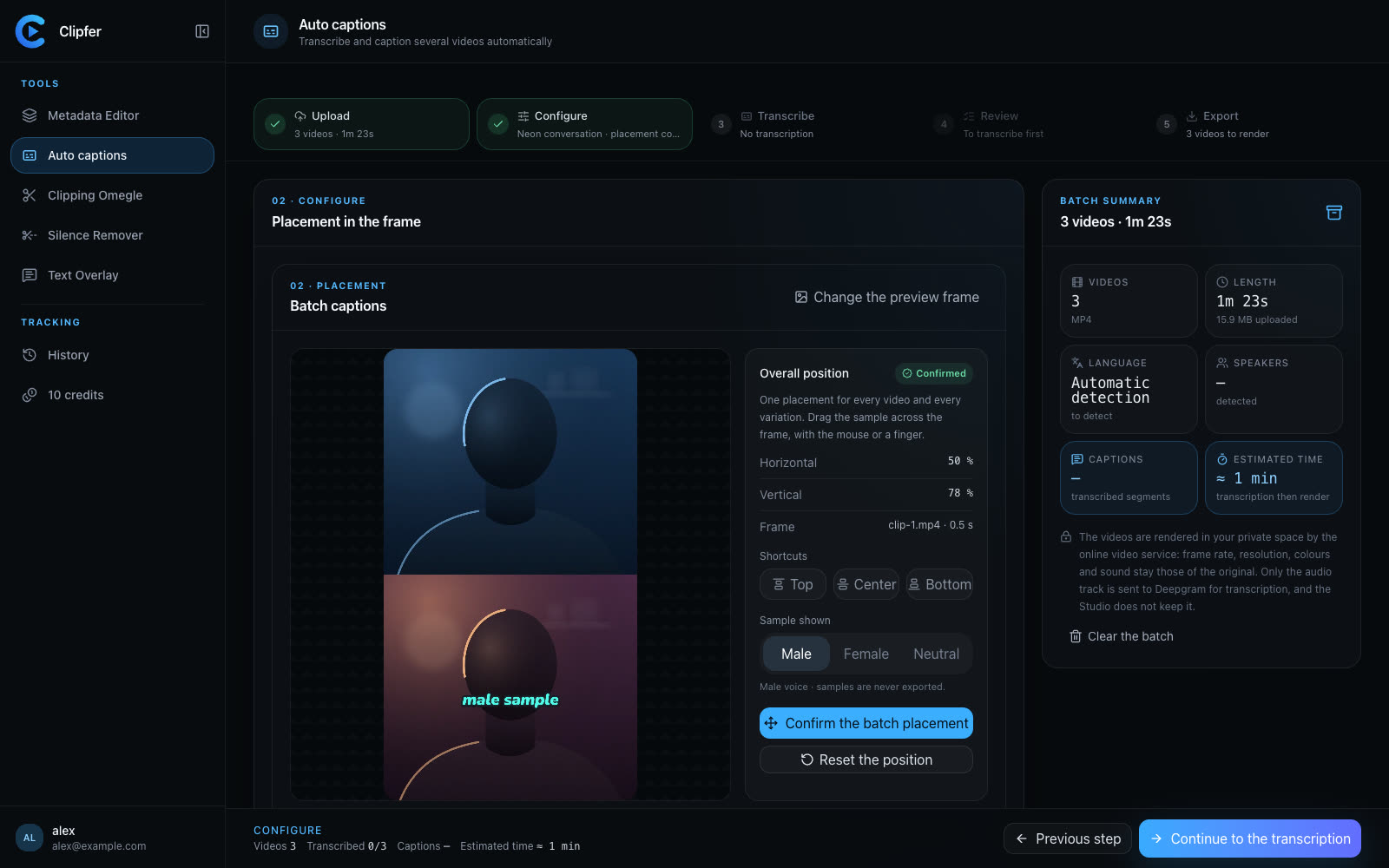
Most People Watch on Mute: Why Captions Are No Longer Optional
Most viewers scroll through vertical video with sound off, so captions aren't a nice-to-have anymore, they're the baseline for any clip to land.
Filming With Your Phone: Framing, Sound, and Light Without Gear
Practical phone-filming basics for vertical creators: how to frame, capture clean audio, and light a scene without buying any gear.
Quality Checks Before Publishing: The List Every Clip Should Pass
A practical pre-publish checklist for vertical clips, podcasts, and bulk uploads so you catch problems before your audience does.